Research Areas
polymer chemistry | self-assembly | biomimetic reactivity | multi-scale characterization
Future biotechnologies will increasingly rely on the ability to organize and control chemical reactions with the spatial and dynamic precision found in living systems, opening opportunities in sustainable biomanufacturing, adaptive materials, and synthetic cells. The foundation of such technologies is a predictive understanding of how molecular organization and confinement shape chemical reactivity. The Rizvi Lab will leverage polymer chemistry, biochemistry, and multi-scale characterization to design condensates encoded with molecular sequence, nanoscale organization, and mesoscale morphology to create programmable reaction environments.
Ongoing & Previous Projects
I am investigating PAH–ATP complex coacervates as a model system for understanding how condensate morphology and interfacial properties regulate chemical reactivity. By tuning molecular composition and environmental conditions, these coacervates can access unconventional architectures, including hollow condensates. I am particularly interested in how the strong charge separation and resulting electric fields at coacervate interfaces influence molecular organization, reactant partitioning, and reaction kinetics. This work aims to uncover how condensate interfaces can actively facilitate chemical transformations, providing new principles for understanding reactivity in compartmentalized soft materials.
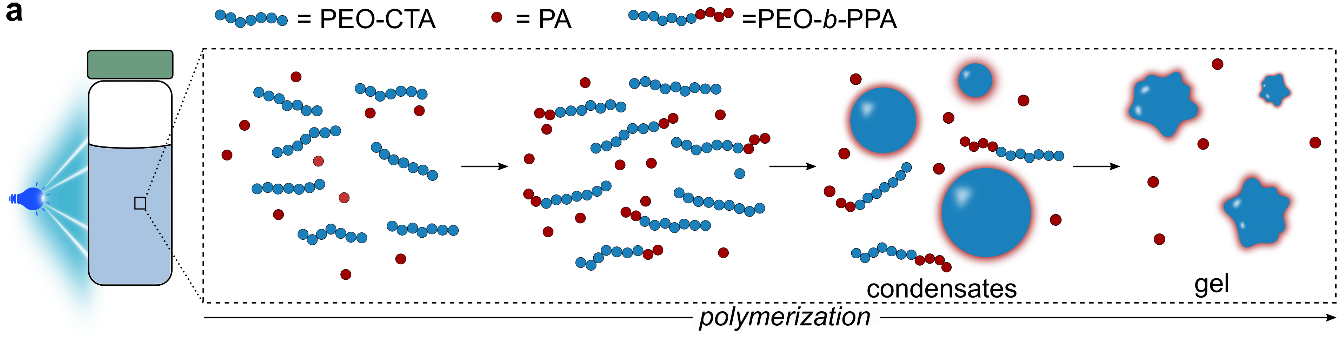
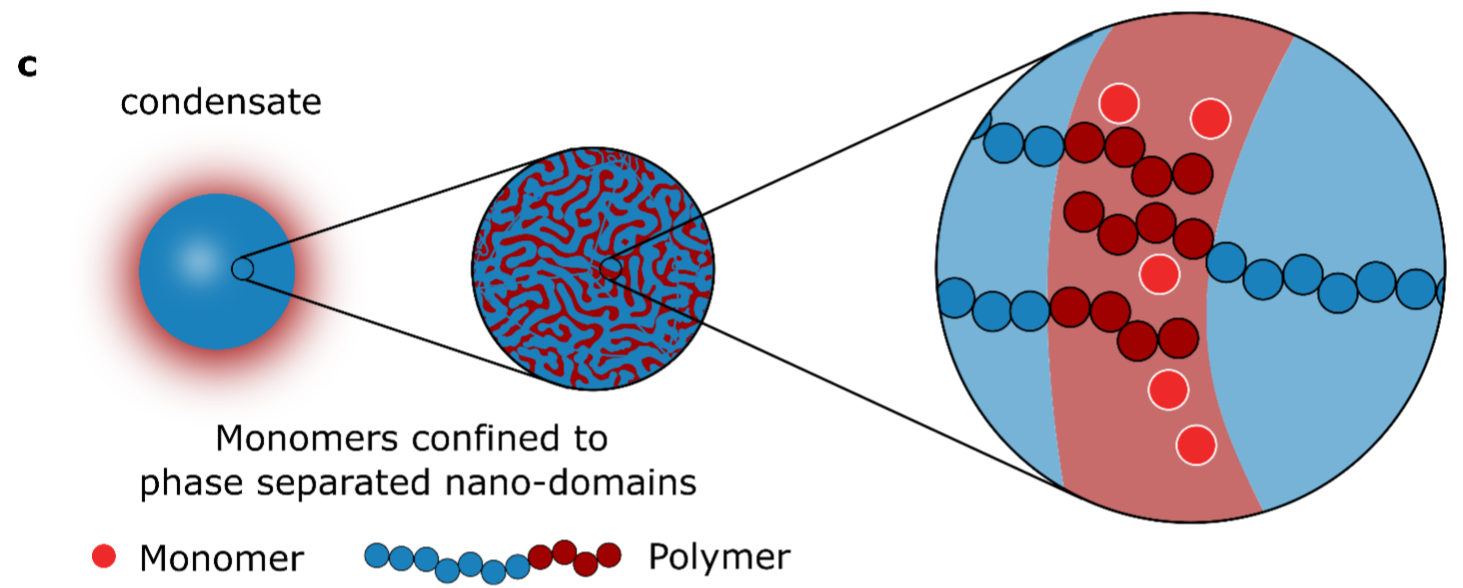
My Polymerization-Induced Condensation (PICON) project discovered how polymer growth can dynamically generate its own reaction environment through liquid–liquid phase separation. In this system, growing block copolymers undergo condensation once they reach a critical chain length, creating polymer-rich domains that continue to evolve as polymerization proceeds. By combining controlled radical polymerization, structural characterization, and kinetic analysis, I found that this self-generated compartmentalization can fundamentally alter reaction behavior, including a shift from conventional first-order kinetics toward near-zero-order polymerization. This work establishes PICON as a model for understanding how emergent nanoscale organization can feed back on chemical reactivity, providing a framework for studying reaction–structure coupling in synthetic and biological condensates.
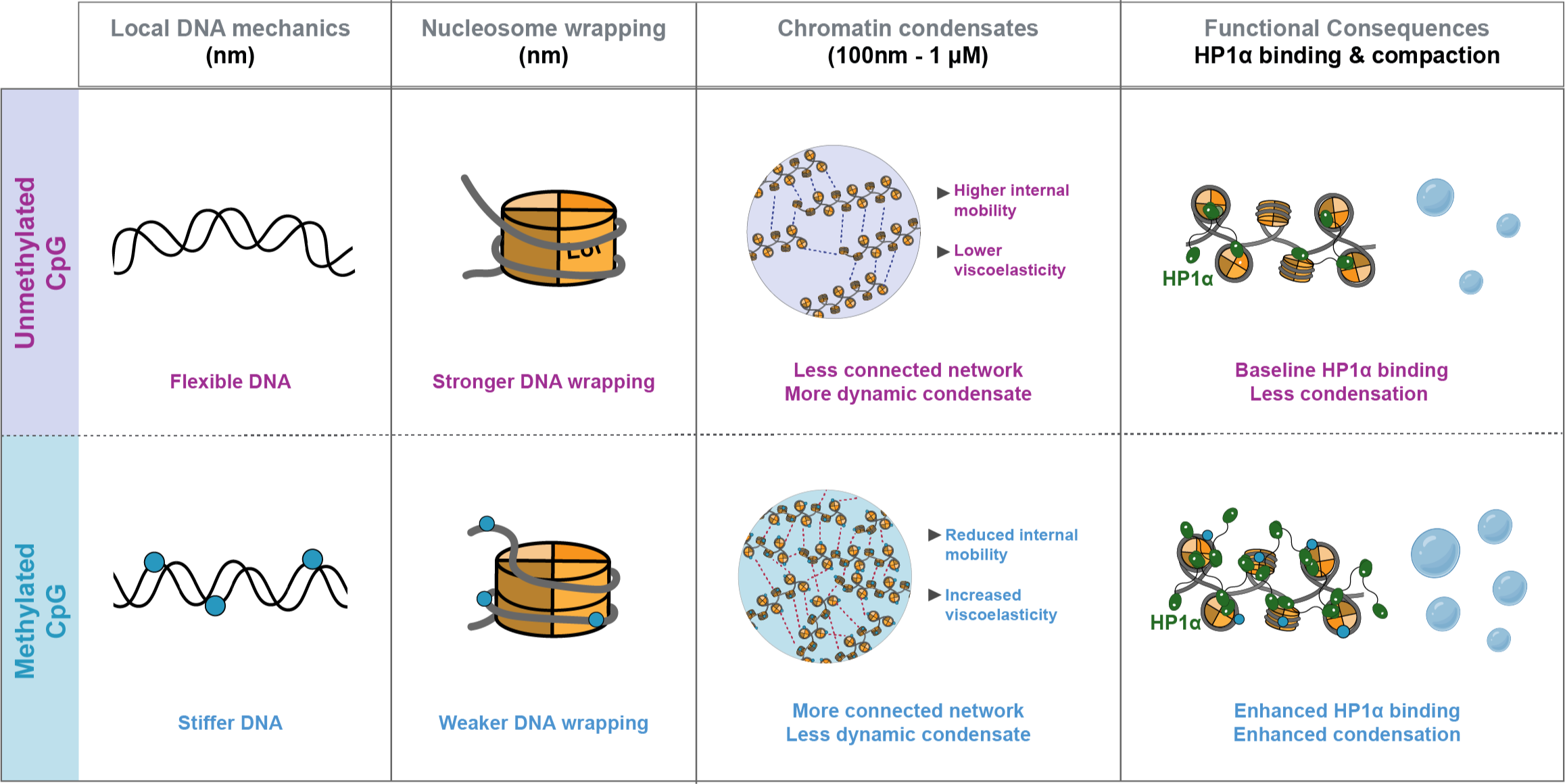
The corresponding work investigates how CpG methylation reshapes chromatin across multiple length scales, connecting molecular changes in DNA and nucleosomes to the emergent dynamics and material properties of chromatin condensates. This highly collaborative effort brings together complementary expertise from the Chan Zuckerberg Initiative (CZI), Priya R. Banerjee’s group at the University at Buffalo (SUNY), and Jorine Eeftens’s group at Radboud University, combining single-molecule biophysics, condensate characterization, and advanced structural imaging. Together, we aim to understand how epigenetic modifications propagate across scales to reorganize chromatin structure and dynamics. Ongoing work is focused on analyzing cryo-electron tomography datasets to resolve the nanoscale organization of chromatin within condensates and connect these structures to their macroscopic material properties.
Cryo-ET of Chromatin Condensates
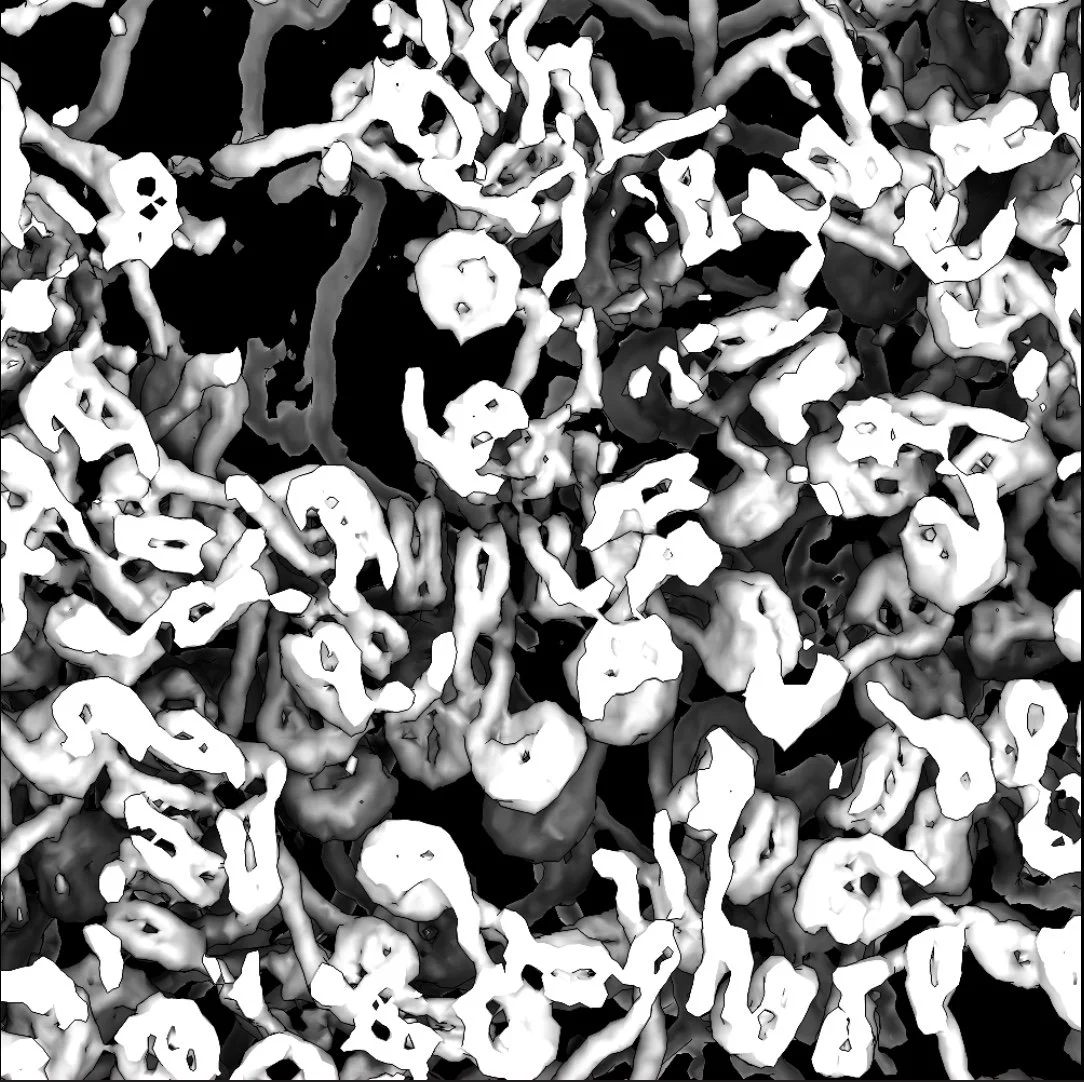
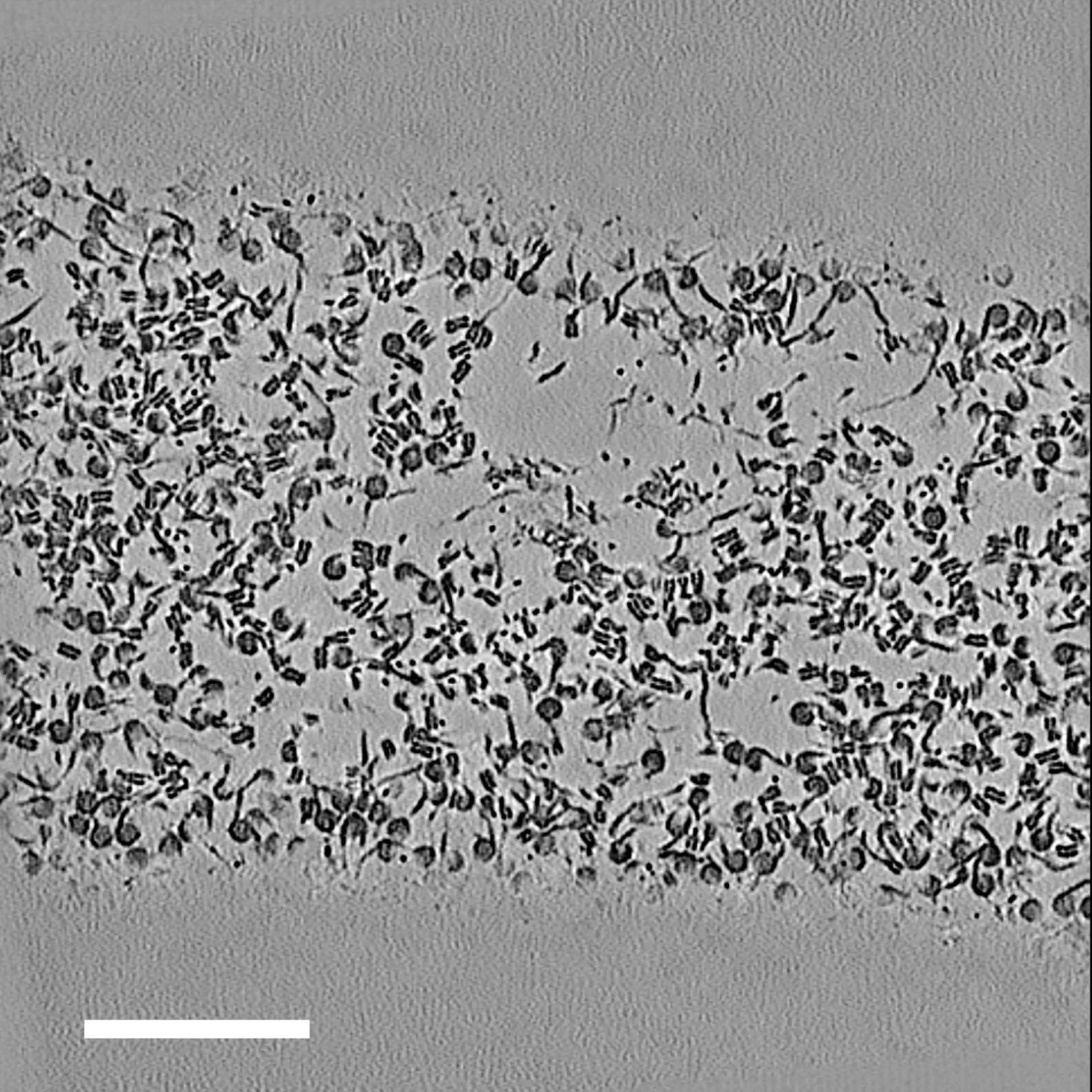
Imaging condensate materials presents a major challenge because they are soft, dynamic, highly hydrated, and structurally heterogeneous, making it difficult to preserve and resolve their native nanoscale organization using conventional microscopy. I develop and apply cryo-electron microscopy (cryo-EM) and cryo-electron tomography (cryo-ET) approaches to visualize these materials in a near-native vitrified state at nanometer resolution. These methods enable direct observation of internal networks, interfaces, and structural heterogeneity that are inaccessible to bulk measurements alone. By adapting cryogenic imaging workflows specifically for condensate systems, I aim to connect nanoscale organization with mesoscale morphology, material properties, and chemical function.
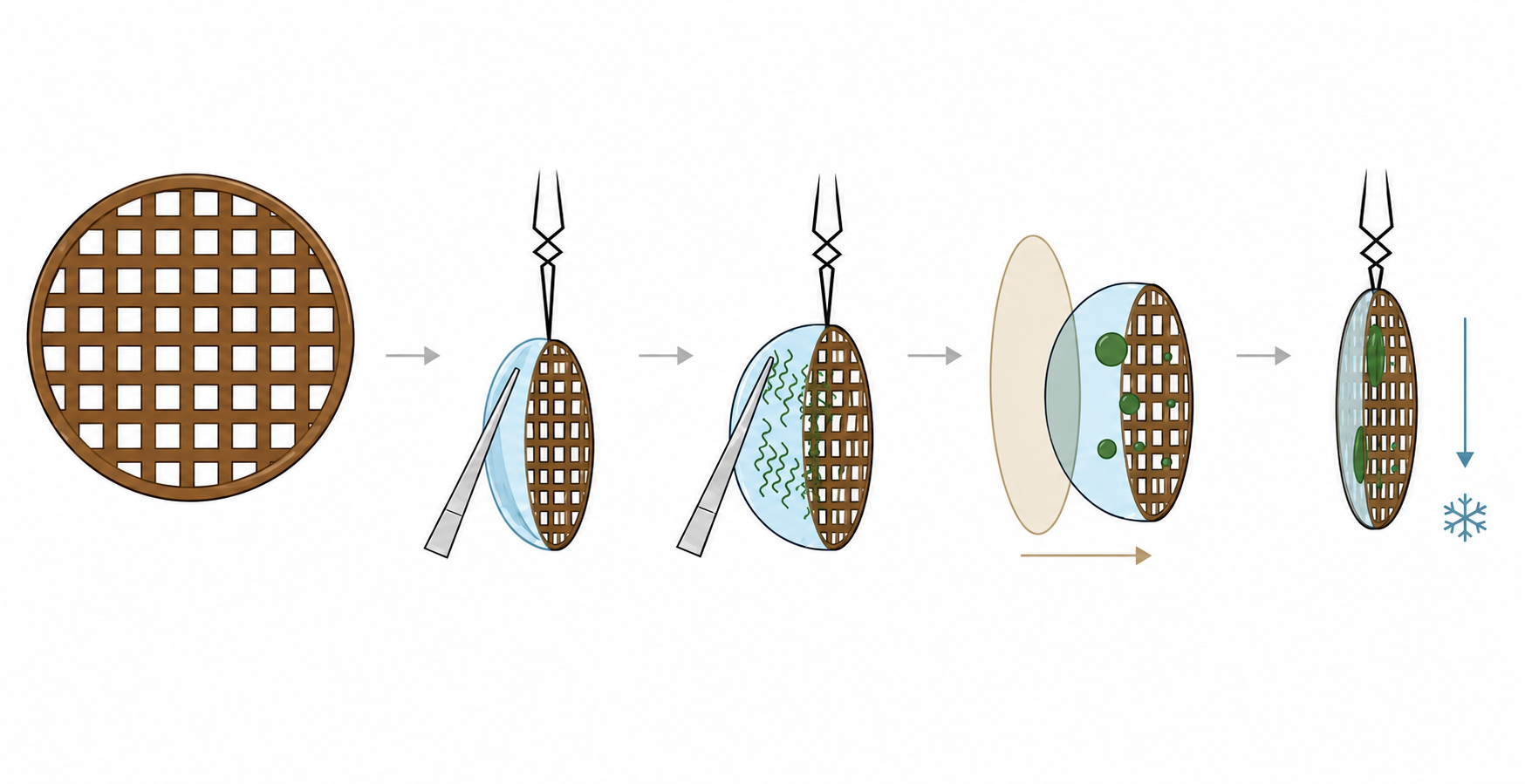
Workflow for sample vitrification
EM Grid
Exmple Cryo-ET Volumer of a condensate. Scale = 100 nm